Trinity place
More Style. More Life.
Branding

Disciplines
Brand Identity
Brand Positioning
Brand Strategy
Trinity Place on Nassau Street in Dublin had a location problem that was really a perception problem. The physical address was excellent; central, high-footfall, adjacent to one of the city's primary landmarks.
Premium retailers choosing where to open a Dublin flagship don't just look at footfall data. They assess the street's character, its brand adjacencies, and whether the environment reflects their own positioning. Trinity Place needed a rebrand that would signal premium retail destination credibly enough to attract the calibre of tenant that would, in turn, justify the rents and attract the buyers.
THE CHALLENGE
The risk in repositioning a street is the same as repositioning any physical asset: if the brand feels aspirational but the environment doesn't yet match, sophisticated buyers see through it immediately. The identity had to lead the market creating the perception of a premium destination before every unit was occupied at that level.
The additional challenge was that a street identity has to compete visually in an environment full of competing brand messages, signage, and visual noise. Shouting is the instinct; the wrong instinct.
THE APPROACH
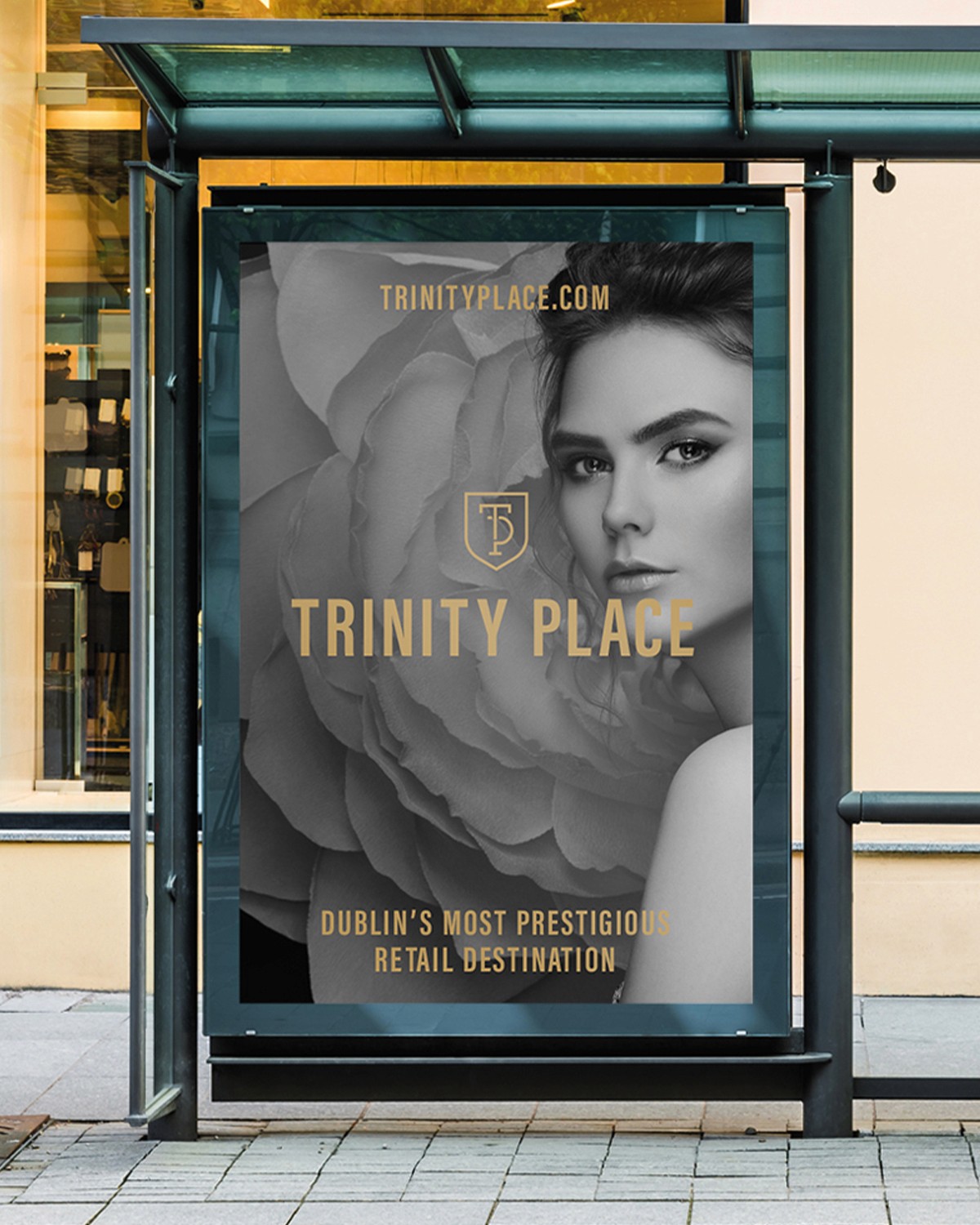
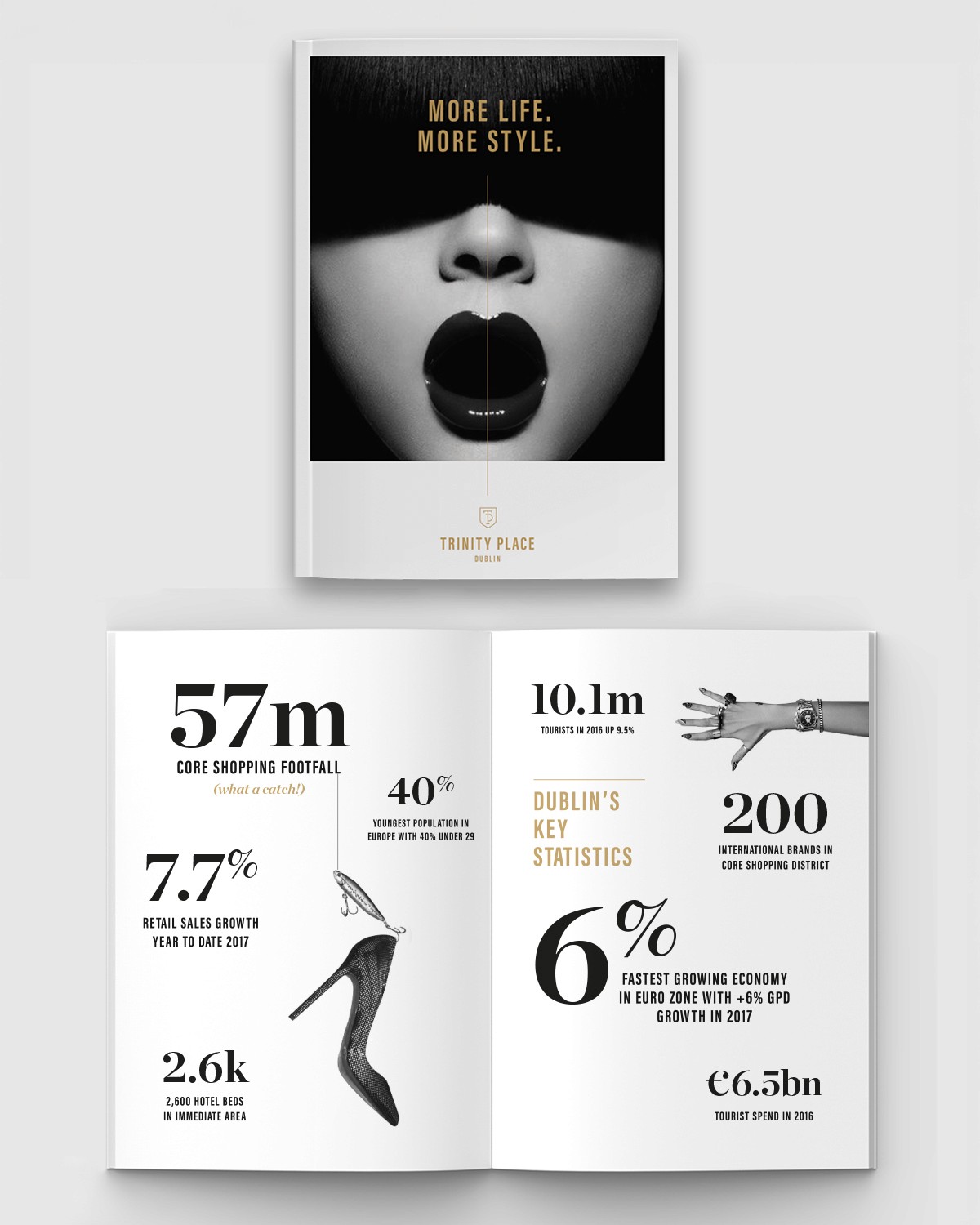
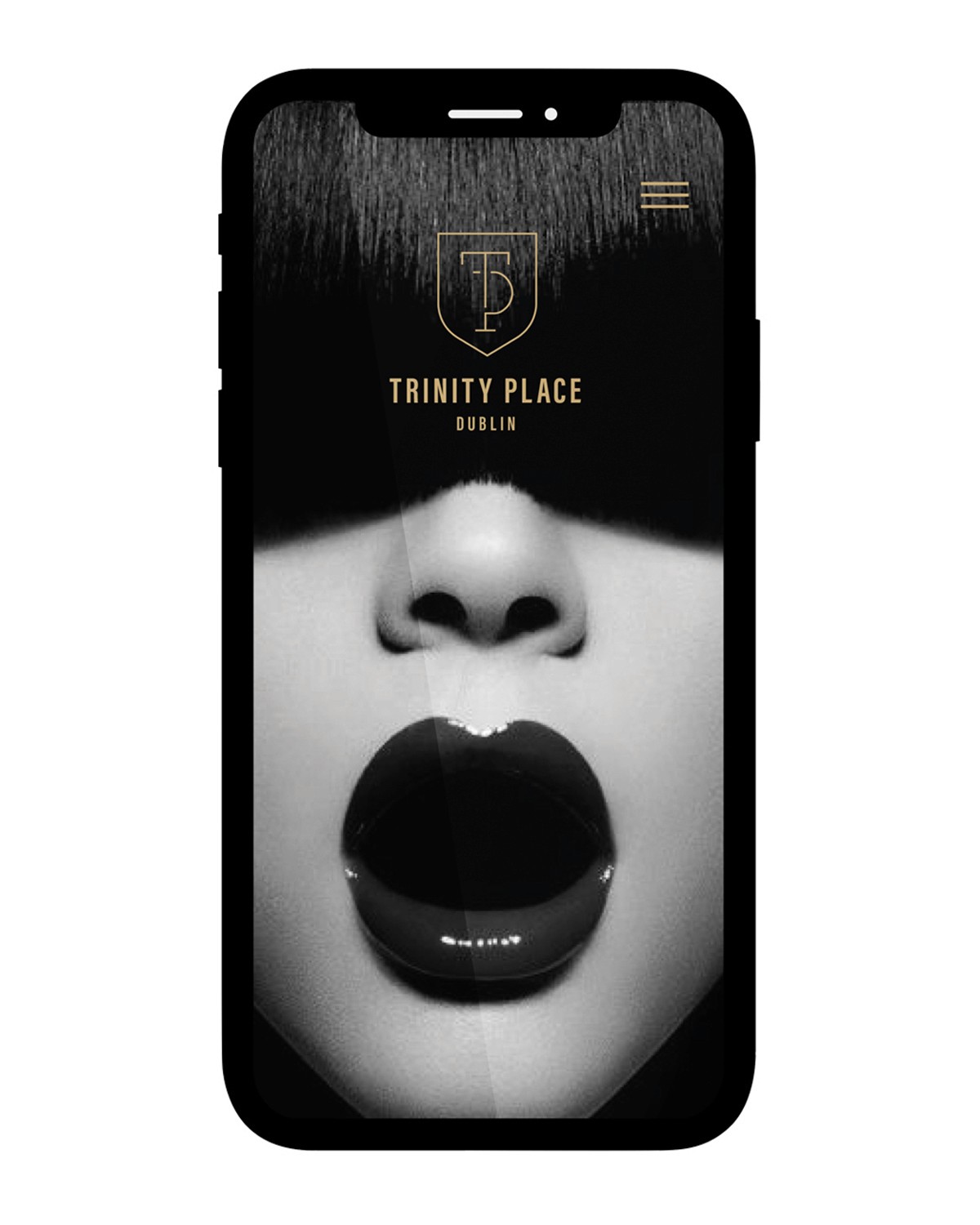
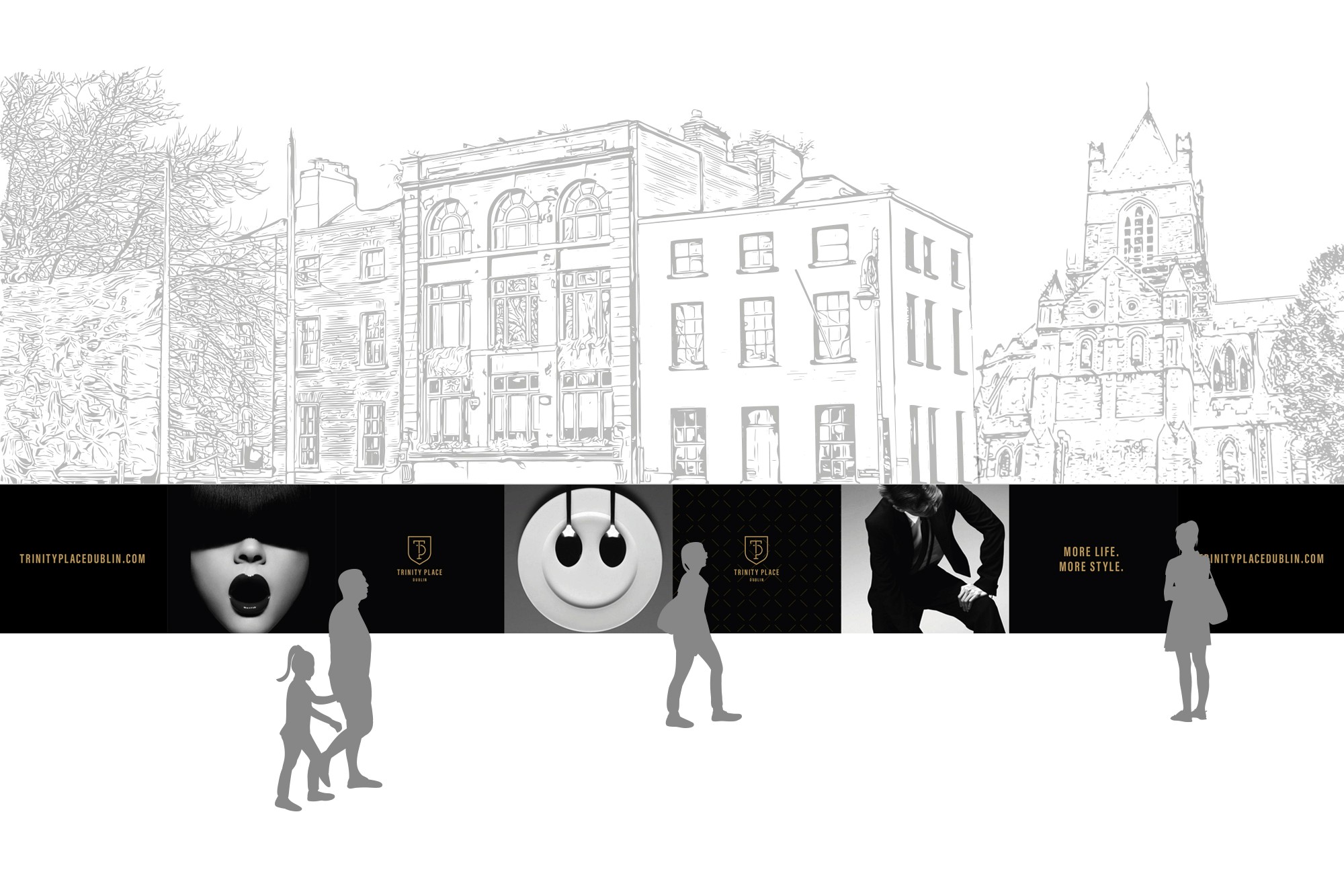
The creative decision was to refuse to compete on volume. Rather than bold colour and prominent branding, the identity leaned into restraint, a timeless black-and-white aesthetic drawn from high-end fashion, art, and architectural publishing.
This was a deliberate signal: premium retail brands would see their own visual language reflected in the street's identity. The message wasn't 'we are a busy shopping street'; it was 'we are a curated environment.'
The result is an identity with longevity built in, one that doesn't date, doesn't clash, and doesn't need to be refreshed every few years as retail trends shift.
THE OUTCOME
Attract a tenant mix that self-reinforced the street's premium positioning. The identity was the first conversation Trinity Place had with prospective tenants, it had to be credible enough that premium retailers believed the street was already where they wanted to be, not where it aspired to get to.
Trinity Place on Nassau Street in Dublin had a location problem that was really a perception problem. The physical address was excellent; central, high-footfall, adjacent to one of the city's primary landmarks.
Premium retailers choosing where to open a Dublin flagship don't just look at footfall data. They assess the street's character, its brand adjacencies, and whether the environment reflects their own positioning. Trinity Place needed a rebrand that would signal premium retail destination credibly enough to attract the calibre of tenant that would, in turn, justify the rents and attract the buyers.
THE CHALLENGE
The risk in repositioning a street is the same as repositioning any physical asset: if the brand feels aspirational but the environment doesn't yet match, sophisticated buyers see through it immediately. The identity had to lead the market creating the perception of a premium destination before every unit was occupied at that level.
The additional challenge was that a street identity has to compete visually in an environment full of competing brand messages, signage, and visual noise. Shouting is the instinct; the wrong instinct.
THE APPROACH
The creative decision was to refuse to compete on volume. Rather than bold colour and prominent branding, the identity leaned into restraint, a timeless black-and-white aesthetic drawn from high-end fashion, art, and architectural publishing.
This was a deliberate signal: premium retail brands would see their own visual language reflected in the street's identity. The message wasn't 'we are a busy shopping street'; it was 'we are a curated environment.'
The result is an identity with longevity built in, one that doesn't date, doesn't clash, and doesn't need to be refreshed every few years as retail trends shift.
THE OUTCOME
Attract a tenant mix that self-reinforced the street's premium positioning. The identity was the first conversation Trinity Place had with prospective tenants, it had to be credible enough that premium retailers believed the street was already where they wanted to be, not where it aspired to get to.